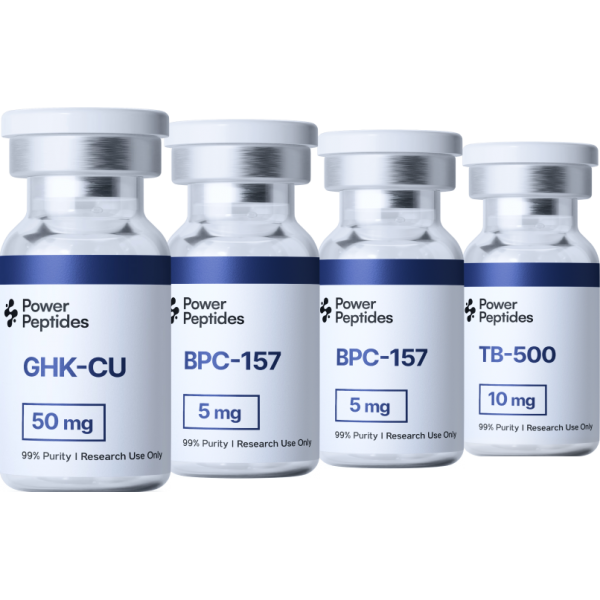
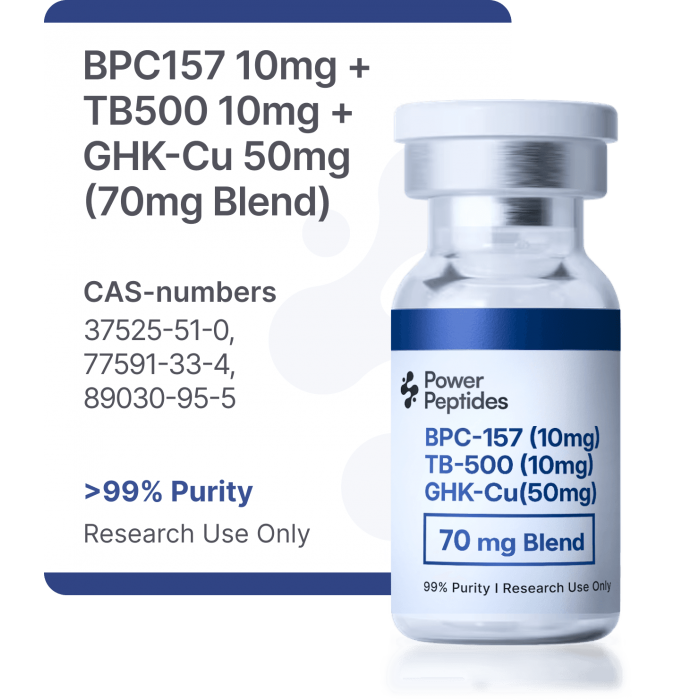
BPC-157 10mg + TB-500 10mg + GHK-Cu 50mg (70mg blend)
- Ex Tax: $324.99
- Product Code: M00000030
- Availability: In Stock
CharacteristicsMolecular FormulaBPC-157: C₆₂H₉₈N₁₆O₂₂ TB-500: C₄₄H₆₉N₁₁O₁₂ GHK-Cu: C₁₄H₂₄N₆O₃·CuCASNumberBPC-157: 137525-51-0 TB-500: 77591-33-4 GHK-Cu: 89030-95-5Molar MassBPC-157: 1419.6 g/mol TB-500: 928.1 g/mol GHK-Cu: 426.9 g/mol Amino Acid SequenceBPC-157: Gly-Glu-Pro-Pro-Pro-Gly-Lys-Pro-Ala-A..
Available Options
Characteristics
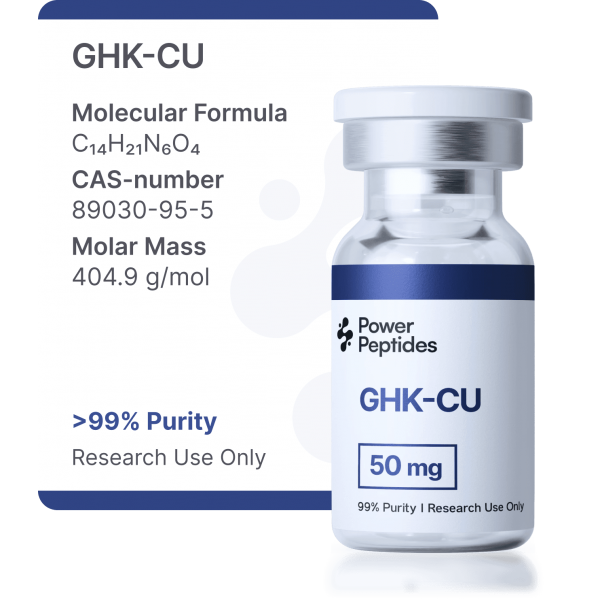
Molecular Formula | BPC-157: C₆₂H₉₈N₁₆O₂₂ TB-500: C₄₄H₆₉N₁₁O₁₂ GHK-Cu: C₁₄H₂₄N₆O₃·Cu |
CASNumber | BPC-157: 137525-51-0 TB-500: 77591-33-4 GHK-Cu: 89030-95-5 |
Molar Mass | BPC-157: 1419.6 g/mol TB-500: 928.1 g/mol GHK-Cu: 426.9 g/mol |
Amino Acid Sequence | BPC-157: Gly-Glu-Pro-Pro-Pro-Gly-Lys-Pro-Ala-Asp-Asp-Ala-Gly-Leu-Val TB-500: Ac-Ser-Asp-Lys-Pro-Asp-Met-Ala-Glu-Ile-Glu-Lys-Phe-Asp-Lys-Ser-Lys-Leu-Lys-Lys-Thr-Glu-Thr-Gln-Glu-Lys-Asn-Pro-Leu-Pro-Ser-Lys-Glu-Thr-Ile-Glu-Gln-Glu-Lys-Gln-Ala-Gly-Glu-Ser GHK-Cu: Gly-His-Lys-Cu |
Synonyms | BPC-157: Body Protection Compound-157, Pentadecapeptide BPC-157, PL 14736 TB-500: Thymosin Beta-4, Tβ4, TMSB4X, Thymosin β₄ GHK-Cu: Copper Tripeptide-1, Glycyl-L-histidyl-L-lysine copper(II), Copper Peptide GHK |
Solubility | Water-soluble |
Organoleptic Profile | White lyophilized powder |
Composition | Blend of BPC-157, TB-500, GHk-Cu peptides. Requires reconstitution. |
How does BPC-157 + TB-500 + GHK-Cu blend work?
Researchers have studied this peptide blend to uncover its influence on various biological pathways. The following areas of interest have been studied in the lab setting:
BPC-157. Recent research has focused on the relationship between BPC-157 and angiogenesis and blood vessel formation through potential modulation of growth factor expression (particularly vascular endothelial growth factor (VEGF)). Additional studies have considered its effects on fibroblast migration and proliferation in experimental models.
TB-500. TB-500’s actin-binding properties and possible role in cell migration facilitation have been a point of focus for scientists. Investigations have also reviewed its association with proteins linked to tissue processes, as well as its theoretical modulation of inflammatory cytokines in preclinical systems.
GHK-Cu. Studies indicate that GHK-Cu may function as a copper carrier, delivering copper to sites where it can serve as a cofactor in enzymatic pathways such as collagen synthesis and extracellular matrix remodeling. Moreover, research has evaluated its role in regulating gene expression, with reported associations across thousands of genes.
Together, these peptides are being studied for their potential to influence angiogenesis, inflammatory pathways, and extracellular matrix dynamics in controlled laboratory research models.
Research Applications
Tissue-Related Pathways. Laboratory studies have examined this blend in relation to processes such as angiogenesis, extracellular matrix dynamics, and cellular migration.
Inflammatory Signaling. Components have been investigated for their potential role in modulating cytokine activity and related inflammatory pathways in preclinical models.
Collagen Pathways. Research on GHK-Cu has explored its involvement in collagen synthesis and extracellular matrix organization.
Multi-Pathway Interactions. Studies have considered the possibility that these peptides act through distinct but complementary mechanisms in experimental systems.
Areas of Interest. Ongoing investigations include applications in musculoskeletal, dermatological, and neurological research contexts under controlled laboratory conditions.
Summary
The BPC-157 + TB-500 + GHK-Cu blend serves as a research tool for studying angiogenesis, cell migration, collagen pathways, and extracellular matrix dynamics in preclinical models. Ongoing investigations examine its mechanisms under controlled laboratory conditions.
Resource
All products on this site are for research and development use only. Products are not for human consumption of any kind. The statements made on this website have not been evaluated by the US Food and Drug Administration....Related Products