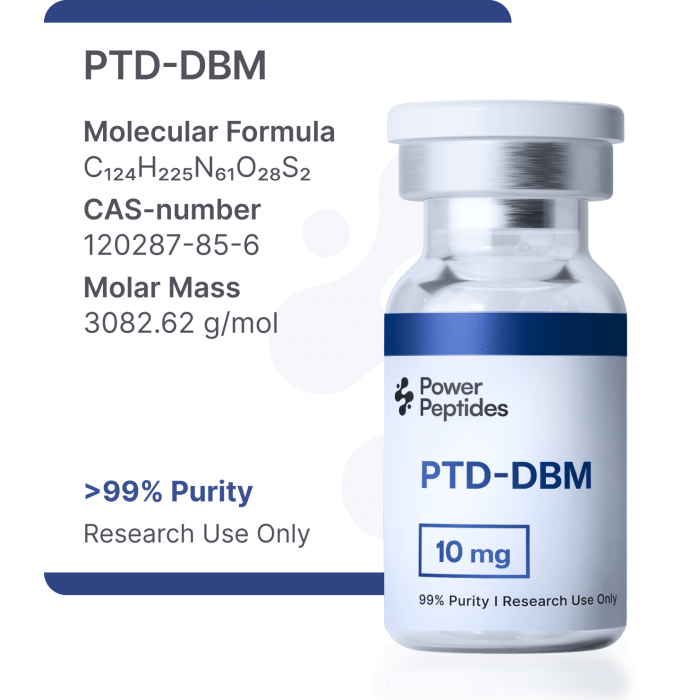
PTD-DBM
- Ex Tax: $187.99
- Product Code: M00000014
- Availability: In Stock
CharacteristicsMolecular FormulaC₁₂₄H₂₂₅N₆₁O₂₈S₂CAS Number120287-85-6 or 1609454-11-6Molar Mass3082.62 g/molAmino Acid SequenceArg-Arg-Arg-Arg-Arg-Arg-Arg-Arg-Gly-Gly-Gly-Gly-Arg-Lys-Thr-Gly-His-Gln-Ile-Cys-Lys-Phe-Arg-Lys-CysSynonymsProtein Transduction Domain-fused Dishevelled Binding Motif, Prote..
Available Options
Characteristics
Molecular Formula | C₁₂₄H₂₂₅N₆₁O₂₈S₂ |
CAS Number | 120287-85-6 or 1609454-11-6 |
Molar Mass | 3082.62 g/mol |
Amino Acid Sequence | Arg-Arg-Arg-Arg-Arg-Arg-Arg-Arg-Gly-Gly-Gly-Gly-Arg-Lys-Thr-Gly-His-Gln-Ile-Cys-Lys-Phe-Arg-Lys-Cys |
Synonyms | Protein Transduction Domain-fused Dishevelled Binding Motif, Protein transduction domain (PTD)-Dvl-binding motif (DBM), Hair growth peptide, Follicle regeneration peptide |
Solubility | Water-soluble |
Organoleptic Profile | White to off-white powder |
Composition | Lyophilized powder - requires reconstitution |
How is PTD-DBM Used in Research?
PTD-DBM peptide mechanism of action research suggests it may primarily function as a peptide inhibitor of the CXXC5-Dishevelled protein interaction, potentially activating the Wnt/β-catenin signaling pathway. Current studies on ptd-dbm indicate the compound may demonstrate enhanced hair follicle regeneration properties through multiple potential molecular pathways.
The primary mechanism research suggests that ptd dbm peptide may involve the competitive binding to the Dishevelled (Dvl) protein, potentially preventing CXXC5 from inhibiting the Wnt/β-catenin pathway. By disrupting this inhibitory interaction, ptd dbm may enhance downstream signaling involved in hair follicle development and regeneration through both direct and indirect cellular pathways.
Additionally, studies indicate PTD-DBM may have effects on wound-induced hair neogenesis (WIHN) and tissue regeneration. Research suggests it may stimulate stem cells in hair follicles and possibly enhance keratinocyte proliferation, potentially contributing to improved follicle cycling and hair growth phases.
The peptide's protein transduction domain (PTD) structure, consisting of eight arginine residues, may allow for enhanced cellular penetration, possibly leading to more consistent therapeutic effects when applied topically to affected areas.
Research also suggests potential synergistic effects when combined with compounds like valproic acid (VPA), which may further activate the Wnt/β-catenin pathway through GSK3β inhibition.
For research institutions looking to buy ptd-dbm from a verified ptd-dbm peptide supplier, sourcing high-purity material with validated analytical data is critical to ensure experimental accuracy and reproducibility.
Summary
PTD-DBM may represent an advancement in peptide-based hair regeneration research, in laboratory research contexts. Its unique structure targeting the CXXC5-Dvl interaction may provide a novel approach to activating hair growth pathways while potentially maintaining beneficial effects even after treatment discontinuation. Current investigations indicate that ptd-dbm may have promising research applications in both hair loss prevention and active follicle regeneration. Ongoing studies are also exploring broader regenerative potential, including wound healing and tissue repair models.
Resource
All products on this site are for research and development use only. Products are not for human consumption of any kind. The statements made on this website have not been evaluated by the US Food and Drug Administration....Related Products